
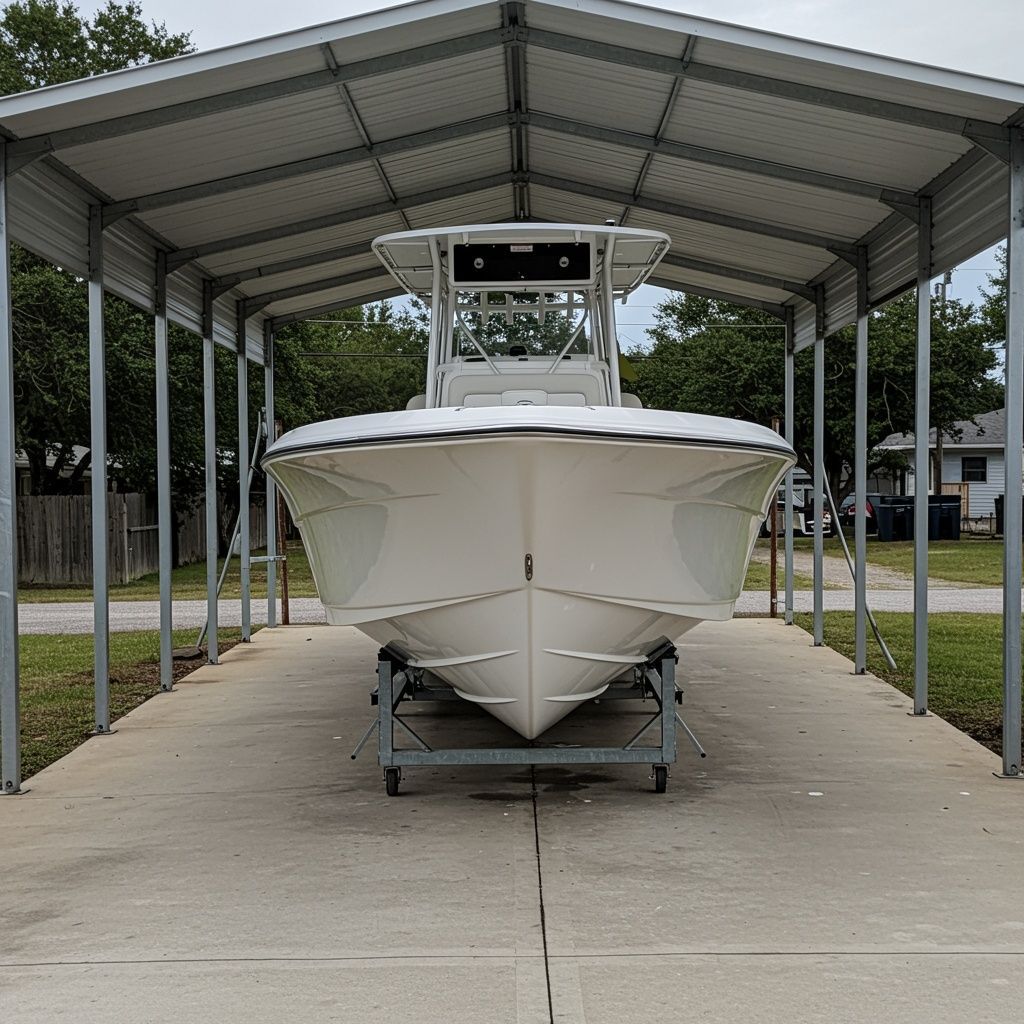
Storage That Stops Sun and Salt Damage
Boat Covers & Shelters in Fort Myers for watercraft exposed to ultraviolet degradation, saltwater corrosion, and storm debris at docks and residential properties
A boat left uncovered in Southwest Florida loses gelcoat luster within two years as ultraviolet radiation breaks down the resin, and salt air corrodes electrical connections, hardware, and engine components even when the vessel isn't in use. Carports by design builds custom marine shelters using aluminum and steel framing engineered to withstand coastal wind loads while protecting boats, trailers, jet skis, and marine equipment from rain, sun, and airborne debris. The shelters are anchored into concrete footings or existing dock structures, with roof panels angled to shed water and resist uplift during high winds common during summer thunderstorms and tropical systems.
Each shelter is sized to the specific vessel dimensions, with clearance calculated to allow for antennas, towers, or extended outriggers, and the structure can include side panels or remain fully open depending on whether you prioritize ventilation or additional weather protection. The framing resists rust through powder coating or galvanization, both of which outlast paint in saltwater environments.
Request a custom marine shelter consultation to review your watercraft storage needs and discuss design options for your property layout.
How Marine Shelters Address Exposure
The shelter blocks direct sunlight that fades upholstery, cracks vinyl, and weakens fiberglass, while the roof prevents rainwater from pooling in the cockpit or bilge, which reduces the risk of mold growth and eliminates standing water where mosquitoes breed. Metal roofing reflects heat better than fabric covers, which means the boat's interior stays cooler and electronics aren't subjected to the extreme temperatures that build up under tarps or canvas.
Once the structure is installed, your boat's finish remains glossy without the chalking and oxidation that develop on unprotected gelcoat, and metal hardware stays bright instead of corroding into a dull, pitted surface. The shelter also keeps bird droppings and tree debris off the deck, which reduces cleaning time and prevents acidic waste from etching the finish.
Marine shelters don't replace proper boat covers for long-term storage, but they reduce how often the cover needs replacement since the fabric isn't constantly stretched and degraded by sun exposure. The shelter can also house trailers, jet ski lifts, or dock boxes, providing covered storage for multiple pieces of equipment under a single structure.
Questions Before Starting Your Project
Boat owners ask about structural requirements, material longevity, and how shelters perform during Florida's hurricane season and intense summer sun.
What foundation is required for a marine shelter?
Shelters are anchored to concrete footings poured below the frost line—or in Florida's case, deep enough to reach stable soil—and the footings are sized based on wind load calculations that account for the structure's height and proximity to open water.
How does nHow do aluminum shelters hold up in salt air?ew siding affect cooling costs?
Aluminum framing is powder-coated or anodized to create a barrier against corrosion, and the material doesn't rust like untreated steel, which makes it well-suited for waterfront installations where salt spray is constant.
Can a shelter protect a boat during a hurricane?
Marine shelters are designed for normal weather exposure and will reduce damage from moderate wind and rain, but they aren't rated to withstand Category 3 or higher winds, so boats should still be moved inland or secured with additional tie-downs when a major storm approaches Fort Myers.
What roof materials are available for boat shelters?
Metal roofing panels are the most common choice because they shed water quickly, reflect heat, and resist mold growth, though polycarbonate or fiberglass panels can be used if you want natural light to reach the vessel.
How much clearance is needed between the boat and the roof?
Most installations allow at least one foot of vertical clearance above the highest point on the boat to prevent contact during trailering or when wind causes the structure to flex slightly, and side clearance depends on whether you need space to walk around the vessel for maintenance.
Carports by design handles permitting, foundation work, and custom fabrication for marine shelters at residential docks, backyard storage areas, and waterfront properties. Schedule an estimate to discuss shelter sizing and installation timelines based on your vessel type and site conditions.